
"local adaptation"
800 article(s) found

Grading, price, raw beans and roasting of Costa Rican Yelsa Rocadura boutique coffee beans
Professional barista communication please pay attention to the coffee workshop (Wechat official account cafe_style) treatment method: yellow honey treatment: about 40% of the pectin is removed; the drying method requires the most direct heat absorption, receives the most light drying, and lasts for about 8 days to reach a stable water content. Costa Rican coffee has always been regarded as the perfect type of classic flavor, balanced, clean and warm.

Is Kenya African beans: there are several brands of kenya coffee Kenyan coffee beans.
Ethiopia is the birthplace of the famous Arabica coffee beans, and people have always maintained the tradition of harvesting wild coffee beans. The coffee garden at an altitude of more than 1500 meters has formed a unique coffee style after thousands of years of evolution and adaptation. Ethiopian coffee grown in the natural wild environment is called wilderness coffee, which retains the most primitive and natural taste of coffee beans.

Guatemala Guatemala 2015 imported new beans home-baked with wine fragrance sun treatment SL28 raw beans
Coffee Bean Details: 1. Country: Guatemala 2. Production area: New Oriental 3. Manor: Guava Plain Manor 4. Producer: Mr. Benjamin Donado 5. Treatment method: wine fragrance sun treatment 6. Variety: SL 28 7. Elevation: 1675 meters 8. Flavor: pineapple, dried apricot fruit, red wine Guatemala is one of the most important coffee producing countries in Central America. The mountains in the territory stretch very long.

The most common 11 species of coffee beans
Following Kaiping (official Wechat account vdailycom) found that Beautiful Cafe opened a small shop of its own many years ago, a goat found a coffee tree in Abyssinia, Ethiopia. The shepherd Khaldi noticed that his goat became very excited after eating the berries on the tree. He also gave it a try, and this is the origin of coffee. No matter this story,

Flavor description of Yega Fischer Coffee in Ethiopia introduction to the producing area of manor varieties
Ethiopian coffee beans grow in close to the natural environment. After years of planting under the same growth conditions, Ethiopian coffee beans have gradually adapted to the environment here. More than 60% of coffee beans are grown in forests or semi-forests. Large-scale coffee-growing villages account for about 35% of the country's total coffee production.

Costa Rican coffee beans are the most common coffee beans in Costa Rica.
Professional barista exchanges, please pay attention to coffee workshop (Weixin Official Accounts cafe_style ) Costa Rica is the first country where coffee was introduced into Central America. It has a long history and a complete coffee organization system from production to sales. Because it is located in the Central American Isthmus, there are many volcanoes in the territory, it has the natural advantages of sunshine and land, and the climate is simultaneously coordinated by the Pacific Ocean and Atlantic Ocean currents and sea breezes.

How is the market of Costa Rican honey coffee beans? which brand of Costa Rican coffee is good?
Professional barista communication please follow the coffee workshop (Wechat official account cafe_style) Costa Rican coffee has always been considered to be the perfect type of classic flavor, balanced, clean, mild is his tone, this batch of western valley Yelzaro processing plant, famous for its excellent natural geographical conditions and excellent regional planting management technology, almost perfect classic flavor, in the acidity

Costa Rican Yellow Honey Leaf Salocadura Fine Coffee Bean Types, Brand Recommendations and Manor
Professional barista exchanges, please pay attention to coffee workshop (Weixin Official Accounts cafe_style ) Costa Rica is the first country where coffee was introduced into Central America. It has a long history and a complete coffee organization system from production to sales. Because it is located in the Central American Isthmus, there are many volcanoes in the territory, it has the natural advantages of sunshine and land, and the climate is simultaneously coordinated by the Pacific Ocean and Atlantic Ocean currents and sea breezes.

Is Costa Rica Yellow Honey Coffee good? the method of making Costa Rican Coffee
For the exchange of professional baristas, please follow the yellow honey made by hand in the coffee workshop (Wechat official account cafe_style). 15g powder, medium grinding (small Fuji ghost tooth cutter 4 grinding), v60 filter cup, 88-89 degrees water temperature, 30g water injection for the first time, steaming for 27 seconds, water injection to 105g water cut off, wait for the water volume of powder bed to be reduced to half and then water injection, slow water injection until 225g water, do not use water at the end.

Costa Rican yellow honey hand data how to drink Costa Rican yellow honey coffee
For the exchange of professional baristas, please follow the yellow honey made by hand in the coffee workshop (Wechat official account cafe_style). 15g powder, medium grinding (small Fuji ghost tooth cutter 4 grinding), v60 filter cup, 88-89 degrees water temperature, 30g water injection for the first time, steaming for 27 seconds, water injection to 105g water cut off, wait for the water volume of powder bed to be reduced to half and then water injection, slow water injection until 225g water, do not use water at the end.

What are the 11 most common varieties of coffee beans
Professional coffee knowledge exchange more information about coffee beans Please follow the coffee workshop (Wechat official account cafe_style) many years ago, a goat found a coffee tree in Abyssinia, Ethiopia. Shepherd Khaldi noticed that his goat became very excited after eating the berries on the tree. He also gave it a try, and this is the origin of coffee. No matter this

Why coffee beans grow higher in the region, the better the quality, the better the growing environment
The higher the quality of coffee beans grows in the region, the better the quality. Roberta coffee trees are native to Congo, Africa, and account for about 20%, 30% of the world's output. Roberta coffee tree is suitable for planting in the lowlands below 500 meters above sea level. It has strong adaptability to the environment, can resist bad climate, resist diseases and insect pests, and is not needed in soil preparation, weeding and pruning.

What's the taste of Costa Rican yellow honey? how does Costa Rican coffee brew?
The exchange of professional baristas Please pay attention to the coffee workshop (Wechat official account cafe_style) the cultivation of coffee in Costa Rica has a long history, but in the past 10 years, even more cutting-edge dry treatment has become a trend, collectively known as the new method of honey treatment, the use of scraper to adjust the degree of scraping of the pulp function, the output with the color from light to dark (white, yellow-red-white, yellow-red-black) and show honey from light to

Ethiopian ethiopia coffee beans feature the oldest flavor of Yega Chuefei.
Professional coffee knowledge exchange more coffee bean information please follow the coffee workshop (Wechat official account cafe_style) front street-Ethiopian coffee introduction in Ethiopia, people have maintained the tradition of harvesting wild coffee beans. The coffee garden with an elevation of more than 1500 meters has formed a unique coffee flavor after thousands of years of evolution and adaptation. Grow in a natural wild environment
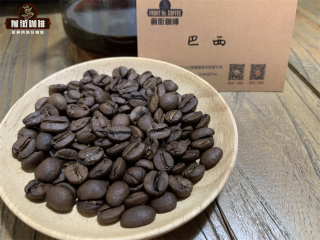
What are the characteristics of Brazilian coffee, the main producing area of Brazilian coffee?
Seven states in Brazil produce coffee. There are 14 coffee producing areas in Sao Paulo (Mogiana, Centro-Oeste), Parana (NortePioneriodoParan) and Bahia (PlanaltodaBahia, Cerra).
What is Shadow Coffee?
Shaded coffee is coffee that grows in the shade of the awning (shade is formed by local mixed trees). Traditional Arabica coffee grows in shady places in Mexico, Central America, Colombia, Peru and Venezuela and other countries of the world, including India and Indonesia, as well as many parts of Africa. Other Arabica coffee grows in sunny or near-sunny areas. Because of this
Fine Coffee learn what Shadow Coffee is
Shaded coffee is coffee that grows in the shade of the awning (shade is formed by local mixed trees). Traditional Arabica coffee grows in shady places in Mexico, Central America, Colombia, Peru and Venezuela and other countries of the world, including India and Indonesia, as well as many parts of Africa. Other Arabica coffee grows in sunny or near-sunny areas. Because of this
Basic knowledge of boutique coffee what is shadow coffee?
Shaded coffee is coffee that grows in the shade of the awning (shade is formed by local mixed trees). Traditional Arabica coffee grows in shady places in Mexico, Central America, Colombia, Peru and Venezuela and other countries of the world, including India and Indonesia, as well as many parts of Africa. Other Arabica coffee grows in sunny or near-sunny areas. Because of this

Boutique coffee knowledge what is shadow coffee?
Shaded coffee is coffee that grows in the shade of the awning (shade is formed by local mixed trees). Traditional Arabica coffee grows in shady places in Mexico, Central America, Colombia, Peru and Venezuela and other countries of the world, including India and Indonesia, as well as many parts of Africa. Other Arabica coffee grows in sunny or near-sunny areas. Because of this

What is Shadow Coffee? Basic knowledge of boutique coffee
Shaded coffee is coffee that grows in the shade of the awning (shade is formed by local mixed trees). Traditional Arabica coffee grows in shady places in Mexico, Central America, Colombia, Peru and Venezuela and other countries of the world, including India and Indonesia, as well as many parts of Africa. Other Arabica coffee grows in sunny or near-sunny areas. Because of this